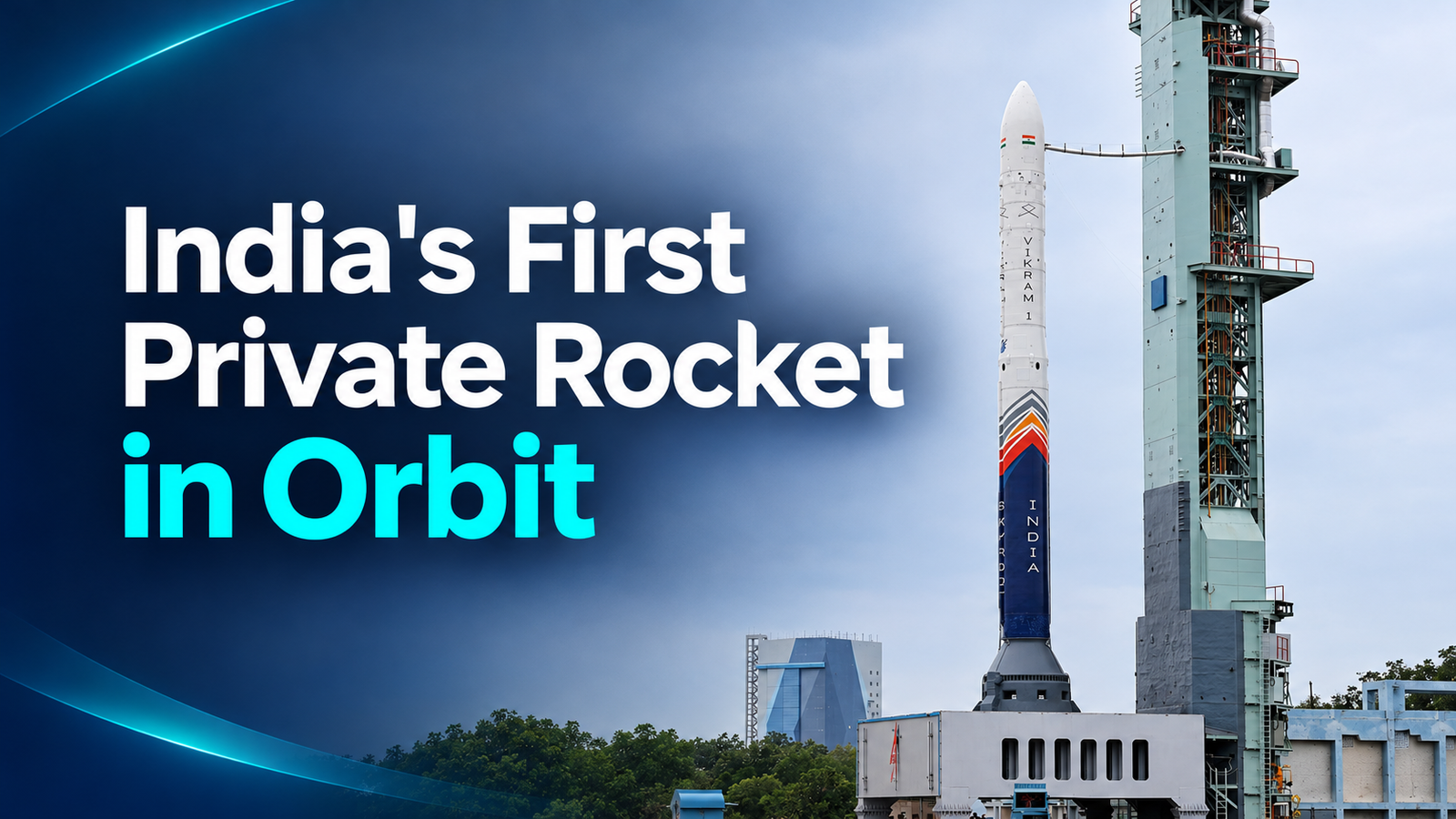
Skyroot Vikram-1 became the first privately built Indian rocket to reach orbit when it lifted off from Sriharikota on 18 July 2026. Four months on, the flight still matters because it changes who can put satellites into space from Indian soil, and on what terms.
This guide covers what the mission carried, what the rocket is designed to do, what remains unproven, and what to watch next.
What Happened on the Skyroot Vikram-1 Launch
According to Via Satellite, Vikram-1 lifted off at 12:05 pm local time on Saturday, 18 July 2026, from the Satish Dhawan Space Centre. Skyroot later confirmed the rocket reached an orbit of about 450 km at a 60-degree inclination.
The mission was named Aagaman. Inc42 reported that the vehicle completed its stage separations, passed the point of maximum aerodynamic stress, and achieved orbital insertion, which validated its propulsion, avionics, telemetry and guidance systems on a real flight.
What Vikram-1 Carried
- Skyroot’s own SCOPE satellite.
- A technology demonstration from Cosmoserve, a soft robotic capture system meant for space debris removal.
- Demonstration payloads from Grahaa Space and DCubed.
These were small test payloads rather than paying commercial satellites. That is normal for a first flight, when the main goal is proving the rocket itself.
How the Rocket Is Designed
Vikram-1 is a four-stage small satellite launcher. Inc42 reported a capacity of up to 480 kg to low Earth orbit and up to 290 kg to sun-synchronous orbit, while Via Satellite quoted a lower figure of 350 kg. The difference likely comes down to which orbit each number refers to, so check Skyroot’s own figures before quoting one.
Skyroot is pitching dedicated missions, manufacturing in India and competitive pricing. Its chief executive, Pawan Kumar Chandana, said the company wants to become “a credible alternative in the small satellite launch market”, a space currently led by players such as SpaceX and Rocket Lab.
Why the Skyroot Vikram-1 Flight Matters
Until this flight, every orbital launch from India was an ISRO launch. A working private launcher gives Indian and foreign satellite makers another option, and it tests whether the policy changes that opened space to private companies can produce real hardware.
The Indian Space Association’s director general, retired Lt Gen AK Bhatt, called the mission a “defining milestone” and said India’s private space sector is “no longer a high-risk bet”. Skyroot itself became India’s first space unicorn in May 2026, a few weeks before the launch.
It also builds on a longer track record. Skyroot flew the suborbital Vikram-S rocket in November 2022, which was the first private Indian rocket to reach space, but it did not go into orbit.
For satellite makers, the practical benefit is choice. A small satellite riding as a secondary payload has to fit around the main customer’s schedule and orbit, while a dedicated small launcher can go when and where that one customer needs. That flexibility is what companies like Skyroot are selling.
What Is Still Unproven
- Reliability. One successful flight does not show a rocket can fly consistently, and the company has said it wants several launches in a short period to build that record.
- Customers. Inc42 reported strong interest from India, the US, Europe, Japan and Southeast Asia, but Skyroot did not name clients or share a backlog.
- Pricing. No public launch price has been announced.
- Production. Moving from one rocket to a steady cadence needs a scaled-up factory and supply chain.
What Comes Next
Skyroot has said more developmental flights will come before Vikram-1 opens for regular commercial service. Its next rocket, Vikram-2, is a one-tonne-class vehicle with a cryogenic upper stage, targeted for a first flight in 2027. The company is also working on reusable launch systems, though it has not given a timeline.
For readers following India’s space program, it is worth watching how private launches fit alongside ISRO’s own busy schedule at Sriharikota, including the Gaganyaan test flights covered in our earlier articles.
This article reflects publicly reported information as of 28 November 2026. Rocket capacity figures differ between reports.
Sources and further reading
- Skyroot Aerospace makes history for India with first launch success, Via Satellite
- Vikram-1 test launch: Skyroot enters its commercial launch era, Inc42
- Vikram-1, India’s first private orbital rocket, aces debut launch, Space.com
- First private orbital launch lifts off from Sriharikota, ISRO